newVideoPlayer( {"type":"video","player":"http://vimeo.com/moogaloop.swf?clip_id=11583128&server=vimeo.com&show_title=1&show_byline=1&show_portrait=0&color=&fullscreen=1","customParams":[] ,"width":570,"height":375,"ratio":0.75,"flashData":"","embedName":null,"objectId":null,"noEmbed":false,"source":"vimeo"} );
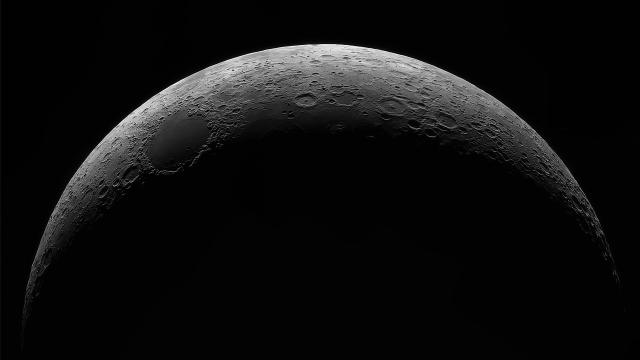
If you’re an astronomy buff and looking for a little bit of Friday Fun, you can pore high-resolution photos of the Moon and help NASA flag and identify previously unseen craters. More »
Android: If you thought exploring the night sky with applications like Stellarium from the comfort of your computer was cool, Google SkyMap gives you real-time and directional star gazing. Point the phone at the sky to see exactly what’s up there. More »
If you’ve never abandoned your 4th grade obsession with the night sky (and who has?), Star Viewer is a web-based tool for peeking at some of the most interesting and vivid sights in the night sky. More »
Space junkies with an iPhone or iPod touch, listen up: NASA released an app compiling pretty much everything going on in the space program to give you access to images, mission info, countdown clocks and more, all in one place. More »
Want to wave at the International Space Station as if flies overhead? Website Heavens Above keeps space freaks and NASA junkies advised of precisely where man-made and naturally occurring objects are orbiting to make tracking their movements a snap. More »
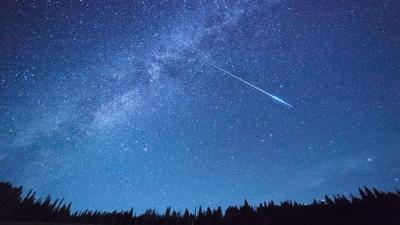
Catching an occasional shooting star is one thing, but with the right timing you can see dozens to hundreds of them in a single night. We’re in the peak season for the Orionid Showers, read on to catch a glimpse. More »
Windows only: Microsoft Research releases astronomy application WorldWide Telescope, software which offers “terabytes” of detailed telescope images of the night sky for exploration right on your desktop. Zoom, pan, and explore the solar system, galaxies and more using WorldWide Telescope. The BBC reports: Collections include pictures from the Hubble and Spitzer telescopes, as well as the Chandra X-Ray Observatory. … “Users can see the X-ray view of the sky, zoom into bright radiation clouds, and then cross-fade into the visible light view and discover the cloud remnants of a supernova explosion from a thousand years ago,” explained Roy Gould, a researcher at the Harvard-Smithsonian Centre for Astrophysics.
Check out WorldWide Telescope in action after the jump.
Via Gizmodo, here’s a demo of WorldWide Telescope at the TED conference back in February.
Google recently launched its Palimpsest project, which will upload and host terabytes of scientific data, including data from the Hubble Space Telescope. But in a talk today at Linux.conf.au Googler Leslie Hawthorn pointed out an awesome mashup that this has made possible – images from the Hubble Space Telescope can be overlaid on the sky view in Google Earth: Sky. Neat stuff. :)